

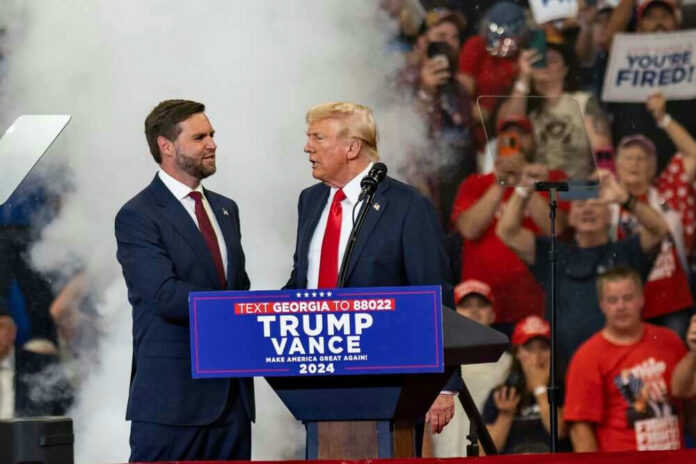
Vice President JD Vance cast the decisive tie-breaking vote that preserved President Trump’s military authority in Venezuela, dealing a crushing blow to Democrats’ desperate attempt to undermine executive power through congressional overreach.
Story Highlights
- Vance breaks 50-50 Senate deadlock to dismiss war powers resolution targeting Trump’s Venezuela operations
- Two Republican senators initially flip-flopped but returned to support Trump after direct presidential pressure
- Resolution would have unconstitutionally restricted Trump’s ability to combat drug cartels and terrorism
- Victory preserves executive authority while Democrats continue their assault on constitutional separation of powers
Trump Pressure Delivers Republican Unity
President Trump personally contacted wavering Republican senators to secure their votes, demonstrating his continued command over the party. Senators Josh Hawley of Missouri and Todd Young of Indiana initially supported the resolution but reversed course after receiving assurances from Secretary of State Marco Rubio.
Trump told Hawley the legislation “really ties my hands,” while Rubio provided written guarantees that major military operations would seek congressional authorization when circumstances permit.
The administration successfully argued that current operations don’t constitute the type of sustained military engagement requiring congressional approval.
The Justice Department released a heavily redacted memo confirming no plans for substantial operations that would amount to a constitutional war. This strategic communication neutralized Republican concerns while maintaining operational flexibility for ongoing counternarcotics missions.
Constitutional Authority vs Democratic Obstruction
The War Powers Resolution, enacted in 1973 over President Nixon’s veto, represents Congress’s attempt to constrain presidential military authority.
However, presidents have consistently cited Article II constitutional powers and post-9/11 authorizations to conduct necessary military operations. Since 1973, presidents have filed 168 reports to Congress while maintaining executive prerogatives in national security matters.
Democrats’ resolution sought to hamstring Trump’s successful operations against Venezuelan narco-terrorists, including the January 3 capture of dictator Nicolás Maduro and his wife Cilia Flores.
These criminals now face trial in U.S. courts on narco-terrorism, cocaine importation, and weapons charges. The administration’s characterization of this as law enforcement rather than military occupation aligns with established precedent from the 1989 Panama operation against Manuel Noriega.
Vance breaks Senate tie, votes to block Venezuela war powers resolution https://t.co/6fNEl9HXyR
— CNBC (@CNBC) January 14, 2026
Strategic Victory Against Globalist Interference
The Senate vote represents more than procedural success—it affirms America’s right to defend itself against foreign drug cartels without seeking permission from congressional Democrats.
The Trump administration designated these cartels as terrorist organizations, properly invoking wartime powers under the global war on terror. Venezuela’s vast oil reserves and strategic Caribbean location make unfettered executive action essential for national security.
Senator Charles Schumer’s complaints about prior administration assurances reveal Democrats’ fundamental misunderstanding of executive flexibility in dynamic security situations.
The administration’s shifting from counternarcotics to resource considerations reflects evolving threats, not deception. Constitutional framers granted war-making powers to ensure rapid response capabilities, not congressional micromanagement of military operations protecting American interests.
Sources:
Does the War Powers Resolution apply to military actions taken in Venezuela?
Venezuela War Powers Resolution Fails in Senate as 2 Republicans Bow to Trump Pressure
The Attack on Venezuela Was Unconstitutional