

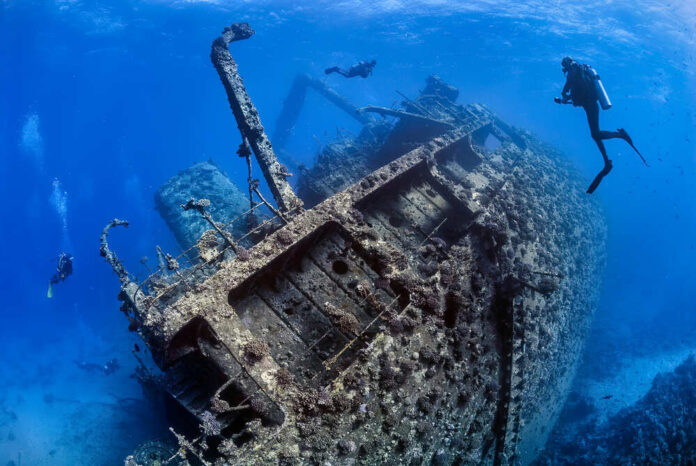
Showcasing the dedication other nations show to protecting their cultural heritage, a 2,000-year mystery shipwreck was unveiled on the Mediterranean coast, featuring perfectly preserved ceramics.
The remarkable shipwreck, discovered near Adrasan on Turkey’s Mediterranean coast, dates back to the Late Hellenistic–Early Roman period, spanning from the second century B.C. to the first century A.D.
Lying between 120 and 150 feet beneath the surface, this ancient vessel has remained undisturbed for two millennia, preserving its cargo in a way rarely seen in archaeological discoveries.
What makes this find truly exceptional is the pristine condition of the ceramic artifacts.
Bowls, plates, trays, and pots remain neatly stacked in their original arrangement, protected by an ingenious method used by ancient merchants – a coating of raw clay that served as a natural sealant against the corrosive effects of saltwater and marine erosion.
Turkish Culture and Tourism Minister Mehmet Nuri Ersoy announced the discovery last month, emphasizing its global significance.
Unlike many American politicians who seem intent on erasing the nation’s founding history, Turkish officials proudly celebrate their heritage and recognize its importance.
“This is a highly precious discovery not just for our country, but also in terms of world cultural heritage,” Ersoy said.
The “Ceramic Wreck,” as it has been dubbed, is just one of over 400 shipwrecks discovered between Patara and Mersin, highlighting the extensive maritime commerce that once thrived in the eastern Mediterranean.
These ships were the lifeblood of ancient economies, transporting consumer goods throughout the region in much the same way American businesses.
In addition, the ceramics’ remarkably preserved state offers researchers unprecedented insights into ancient manufacturing, packaging, and trade practices.
“As a result, the designs of the ceramics have reached us almost intact. This is an extremely valuable discovery not only for our country but also for the world’s cultural heritage,” Ersoy added.
Turkey is not just preserving these treasures – they are proudly putting them on display.
Selected artifacts will soon be featured in the new Mediterranean Underwater Archaeology Museum in the Kemer Idyros region, with construction set to begin this summer.
Part of the Adrasan wreck site will also be opened to diving tourism after excavation is complete, creating economic opportunities while celebrating history.
The excavations are part of Turkey’s “Heritage for the Future” project, a nationwide initiative that maps and documents the country’s archaeological treasures.
As the world uncovers more shipwrecks globally, the intricate tapestry of the past becomes increasingly vivid, which reminds of the enduring legacy of trade and exchange that shaped civilizations.