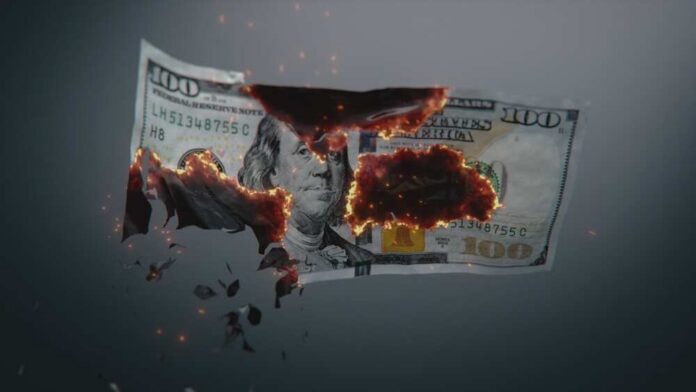
Jeff Bezos’ Washington Post just gutted one-third of its staff in a massive restructuring that exposes the consequences of chasing leftist ideology over financial sustainability and reader priorities.
Story Snapshot
- Washington Post eliminated over 300 newsroom positions on February 4, 2026, cutting sports, foreign bureaus, and book coverage entirely
- Bezos’ paper hemorrhaged $100 million in 2024 losses after alienating readers with political decisions, including refusing to endorse Kamala Harris
- Former editor Marty Baron condemned the cuts as “self-inflicted brand destruction” driven by owner incompetence and editorial mismanagement
- The collapse contrasts sharply with the New York Times’ growth through diversification, highlighting the Post’s failure to adapt beyond partisan politics
Bezos’ Legacy Media Empire Crumbles Under Financial Reality
The Washington Post executed sweeping layoffs affecting approximately one-third of its workforce on February 4, 2026, eliminating more than 300 positions from its 800-person newsroom. Executive editor Matt Murray announced the cuts would shutter the sports section entirely, close foreign bureaus, including Middle East and Cairo operations, and eliminate book coverage.
Murray characterized the restructuring as “painful but necessary” to focus on core strengths like politics and national security. The paper reported a staggering $100 million operating loss in 2024, forcing management to abandon the bloated structure that proved financially unsustainable in today’s media landscape.
The Washington Post told employees today that it was beginning a widespread round of layoffs that are expected to decimate the organization’s sports, local news and international coverage.
More: https://t.co/rIuz9IRNRB
via @nytimes— Star-Advertiser (@StarAdvertiser) February 4, 2026
Poor Leadership Decisions Drive Subscriber Exodus
Jeff Bezos purchased the Washington Post in 2013 for $250 million, ushering in a digital transition under former editor Marty Baron. Recent years reversed that growth as Bezos made controversial editorial decisions that alienated the paper’s subscriber base. His refusal to endorse Kamala Harris in the 2024 election cycle and subsequent conservative opinion shifts triggered massive subscriber cancellations.
Baron, who previously praised Bezos’ journalism support, now condemns his former boss for “gutless” decision-making that drove “hundreds of thousands” of readers away. The workforce already shrank by 400 employees over the previous three years before this latest bloodbath, demonstrating a sustained pattern of decline.
Elite Journalists Plead While Bezos Remains Silent
Staff members launched a desperate #SaveThePost social media campaign pleading with Bezos to halt the cuts, emphasizing the value of foreign bureaus and specialized coverage. Reporters like Cairo Bureau Chief Claire Parker and numerous Middle East correspondents received termination notices while high-profile journalists fled to competitors.
Former reporter Ashley Parker, who recently departed for The Atlantic, called the restructuring “murder” of the Post’s legacy. The Washington Post Guild union highlighted the ongoing staff reductions and suggested Bezos should sell to an owner willing to invest if he refuses commitment.
Columbia journalism professor Margaret Sullivan described the cuts as “devastating for journalism in America and world,” though many conservatives might question that assessment given the paper’s partisan track record.
Failed Business Model Exposes Media Industry Transformation
The Washington Post’s collapse stands in stark contrast to the New York Times’ successful adaptation through strategic acquisitions like The Athletic for sports coverage, Wirecutter for product reviews, and digital games. The Post failed to diversify beyond traditional political reporting, relying heavily on one ideological perspective that proved commercially insufficient.
Murray acknowledged the paper “can’t be everything to everyone” while daily content output declined substantially over five years. This restructuring accelerates the broader print-to-digital contraction across legacy media, demonstrating that billionaire ownership provides no guarantee against market forces when management pursues ideology over profitability and reader value.
The Washington Post’s dramatic downsizing reveals fundamental problems plaguing establishment media outlets that prioritize political narratives over sustainable business practices. While management frames this as strategic refocusing, the evidence suggests self-inflicted wounds from editorial decisions that drove away readers and revenue.
The paper’s concentration on aggressive Trump coverage while eliminating global context and diverse coverage areas demonstrates the limitations of single-perspective journalism in today’s competitive marketplace.
Whether this restructuring saves the storied newspaper or merely delays its ultimate decline remains uncertain, but the message is clear: even deep-pocketed owners won’t subsidize failing business models indefinitely when better alternatives exist for readers seeking balanced, valuable news coverage.
Sources:
The Washington Post, owned by Jeff Bezos, makes dramatic cuts – Politico
Washington Post cuts a third of its staff in a blow to a legendary news brand – ABC7 News
Washington Post layoffs: sports, books, metro – Poynter