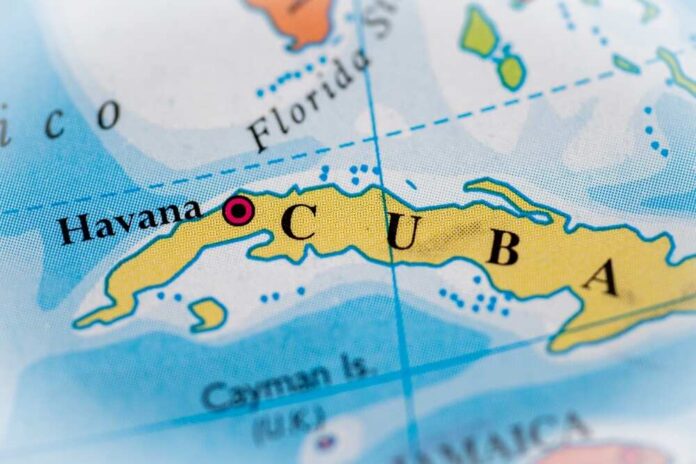
A 30-year-old shootdown over the Florida Straits just came roaring back to life, and this time the name on the murder charges is Raúl Castro.
Story Snapshot
- U.S. prosecutors have moved from hints to formal murder charges tied to a 1996 shootdown that killed four men in unarmed civilian planes.[1][3]
- The case centers on Brothers to the Rescue, a Cuban exile group whose aircraft were destroyed by Cuban fighters over or near international waters.[1]
- Florida lawmakers helped drag this case back into the spotlight, demanding an indictment and public accountability for Raúl Castro.
- The indictment reaches across borders and decades, raising hard questions about justice, politics, and how far American law can go.
How A Routine Patrol Turned Into A Murder Case Three Decades Later
On a February day in 1996, two small Cessna planes from Brothers to the Rescue took off on what their members described as humanitarian missions, scanning the Florida Straits for desperate rafters fleeing Cuba.[1] Cuban radar tracked those unarmed aircraft. A Cuban MiG-29 fighter jet intercepted and shot down both planes, killing four people. A report by the Organization of American States later concluded the strike occurred outside Cuban airspace and violated international law by using lethal force without warning.[1]
Former Cuban President Raul Castro, brother of Fidel Castro, has been indicted in a U.S. court for his involvement in the 1996 shoot-downs of two Brothers to the Rescue aircraft, a U.S. official told Reuters. The move is the latest event in the ongoing tensions between the… pic.twitter.com/NjSuX1voZe
— OSINTdefender (@sentdefender) May 20, 2026
Families of the dead pilots and activists in South Florida never let the incident fade. They treated the shootdown not as a tragic misunderstanding but as a deliberate attack ordered by a hostile regime against civilians.[1][2] One pilot later described looking out his window and seeing a puff of black smoke as a companion aircraft disappeared, calling it an execution, not combat.[2] For many Cuban Americans, that day became a symbol of the Castro government’s contempt for human life and basic decency.
Why Raúl Castro Is The Target, Not Just “Cuba”
At the time of the shootdown, Fidel Castro was Cuba’s head of state and Raúl Castro led the Cuban armed forces.[1] That chain of command is not a minor detail; it is the bridge between a political regime and individual criminal responsibility. News reports describe audio circulations in which family members and advocates claim Raúl can be heard directing forces to strike the unarmed planes.[2] Prosecutors now appear ready to argue that he did not merely preside over the military but personally helped orchestrate the attack.[1][3]
Federal reporting says the United States Justice Department is preparing or has brought a formal indictment against Raúl Castro, including counts such as conspiracy to kill United States nationals, destruction of aircraft, and murder for each of the four men aboard the planes.[2][3]
Officials familiar with the matter told reporters that steps to indict Castro had advanced beyond rhetoric into concrete prosecutorial action, subject to grand jury approval.[1] If accurate, that means a ninety-something former dictator could face American murder charges over a decision made when he was at the peak of his power.
Florida’s Cuban American Lawmakers Forced This Back Onto Washington’s Desk
Members of Congress from South Florida did not wait quietly for the Justice Department to act. Representative María Elvira Salazar, joined by Representatives Mario Díaz-Balart, Carlos Giménez, and Nicole Malliotakis, issued a formal call for Raúl Castro’s indictment. They framed the demand as overdue justice for Americans murdered in international airspace and a test of whether the United States would hold ruthless foreign leaders to account. Their press release described a coordinated campaign to push the executive branch toward prosecution.
Those lawmakers understood their audience. South Florida’s Cuban exile community has long pressed Washington to treat the Castro regime as criminal, not merely adversarial. Public events, including commemorations at Miami’s Freedom Tower, became stages to connect this case with a broader story about communist repression and the need to stand with victims of tyranny.[2] For many, this indictment is not only about four murders; it is about affirming that communist dictators do not get a free pass because time has passed.
Law, Politics, And The Problem Of Proving Old Crimes
Despite the headlines, gaps still exist. Public records so far do not show the actual charging document, docket number, or detailed theory of liability that prosecutors presented to a grand jury.[1] Reports rely on unnamed officials and secondary summaries rather than the text of the indictment itself.[1][3]
That matters because the legal fight will hinge on technical questions: how United States murder statutes reach conduct over international waters, how command responsibility applies, and whether the government can prove Raúl’s personal role beyond symbolic leadership.
Critics point out that earlier Justice Department teams reportedly drafted indictments against Fidel and Raúl Castro that never received approval, suggesting internal doubts or political hesitation, although the names and documents behind those claims remain undisclosed.[2]
Supporters respond that the absence of public paperwork does not erase the core facts: unarmed civilian planes, four dead, a Cuban fighter jet, and a senior commander at the top of the chain.[1][2]
From a common-sense perspective, the key question is straightforward: if the United States does not pursue justice for its own murdered citizens, what exactly is the point of having federal criminal law that reaches overseas?
What This Case Signals About American Resolve
This confrontation with Raúl Castro is about more than one aging revolutionary. It signals whether the United States will treat state-sponsored killing of civilians as a prosecutable crime, even when the suspect is a former head of a hostile regime. The long delay, the missing visible records, and the diplomatic complications all cut against clean resolution, yet political and moral pressure from Congress and victims’ families has finally forced action.[1][3]
However the legal details shake out, the message to other strongmen is unmistakable: years may pass, governments may change, but some cases keep breathing. Four men died in the sky between Cuba and Florida. Their families, their community, and now American prosecutors are betting that the law can still reach back across thirty years and name the man they believe was ultimately responsible.
Sources:
[1] Web – U.S. moving to indict Cuba’s Raúl Castro, sources say – CBS News
[2] YouTube – Cuba’s Raul Castro’s indictment is set to coincide with Miami event …
[3] YouTube – Lawmakers press for indictment of ex-Cuban President Raúl Castro