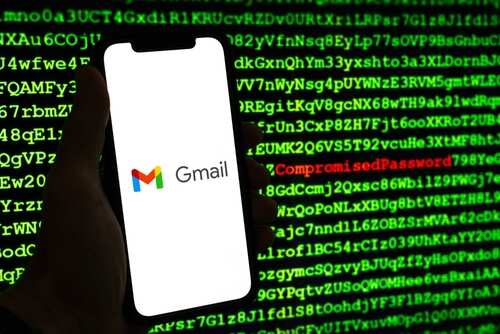
Google’s global security alert after the Salesforce database breach revealed that the biggest threat to your inbox isn’t a hacker’s code—it’s your own misplaced trust in familiar names and cloud connections.
Story Snapshot
- Google warned 2.5 billion Gmail users after a sophisticated breach exploited third-party integrations, not consumer credentials.
- Attackers used stolen OAuth tokens from a Salesforce-linked app to launch global phishing waves targeting business contacts.
- Social engineering, not technical flaws, powered the campaign—proving human trust remains cybercrime’s favorite weapon.
- Industry-wide scrutiny is now focused on OAuth security, third-party app risks, and the limits of trust in cloud ecosystems.
The Salesforce Breach That Shook the Cloud
Google’s August 2025 warning to billions of Gmail users was not the result of a Hollywood-style hack nor a nefarious zero-day exploit. The breach began quietly, with threat actors tracking OAuth tokens tied to Salesloft Drift, a third-party app embedded in Google’s Salesforce environment.
These tokens, small keys of trust, opened doors not to consumer accounts, but to business contact data—the very backbone of enterprise communication.
Attackers then impersonated IT help desks, leveraging credibility and the human urge to comply, to harvest even more access. This was not a brute force assault; it was trust turned into a Trojan horse.
For nearly three months, from June through August, these attackers moved through Salesforce instances, exporting data, searching for credentials, and setting the stage for a wave of impersonation and phishing campaigns.
Google’s public disclosure on August 5 set off alarms worldwide, but by then, attackers had already pivoted, repurposing stolen business contacts and OAuth tokens to target users across Google’s sprawling platforms.
The Unseen Dangers of Third-Party Integrations
Salesforce, long trusted as the engine behind enterprise customer relationships, found its own ecosystem weaponized. The breach echoed a pattern: attackers are no longer chasing technical vulnerabilities alone—they are targeting the glue that binds modern cloud services together.
OAuth tokens, meant to make integrations seamless, became security liabilities when not rigorously managed. The attackers, identified by cybersecurity analysts as UNC6395—likely the infamous ShinyHunters group—knew that trust is the shortest route past the gates.
Google’s own investigation revealed no direct compromise of consumer Gmail or core Salesforce data—a technical relief, but a psychological blow. The exposed business contact data and OAuth tokens supplied everything needed for convincing impersonation.
Phishing and vishing campaigns surged, with attackers masquerading as trusted IT staff, exploiting the very relationships meant to protect users. The phishing wave was not indiscriminate spam—it was laser-targeted, exploiting knowledge of internal hierarchies and business practices.
Escalation and Global Response
By mid-August, the threat actor systematically exported data from Salesforce, and on August 9, even accessed some Google Workspace accounts with compromised tokens. The response was swift: Salesloft and Salesforce revoked all Drift app tokens and removed the app from AppExchange.
Google’s Threat Intelligence Group coordinated with Salesforce to notify affected administrators, suspending integrations and launching global advisories.
Gmail users were urged to reset passwords and adopt advanced authentication methods—an unprecedented scale of remediation for a breach that, technically, hadn’t touched consumer credentials.
Yet, even as the technical gaps closed, the social engineering fallout persisted. Attackers, armed with fresh data, continued phishing attacks well into September.
Security experts warned that as organizations deepen their reliance on interconnected cloud services, the risk of “shadow IT”—unmonitored third-party apps—will only grow. The only true defense, they argued, is a skeptical mindset: never trust a request for credentials, no matter how familiar the face or logo.
Lessons for the Cloud Era: Trust, Verify, Repeat
This breach marks a decisive shift in cybercrime tactics. Technical defenses, no matter how robust, crumble when attackers weaponize trust and social engineering.
The Salesforce breach forced Google, Salesforce, and the entire cloud industry to confront the fragility of OAuth-based integrations.
Analysts predict that organizations will now demand far stricter oversight of third-party apps, regular audits of OAuth permissions, and broader adoption of phishing-resistant authentication—such as passkeys and biometrics.
For end users, the lesson is stark: every convenience in the cloud comes with a shadow of risk. The line between business and personal data grows blurrier, and attackers exploit every seam.
As Google’s own advisory declared, there was no evidence that consumer Gmail accounts were breached, but the flood of phishing attempts revealed the real vulnerability—human nature. In the cloud, vigilance is the price of security, and skepticism is no longer optional.
Sources:
Google Threat Intelligence Group blog
WithSecure/Cyber Protection analysis