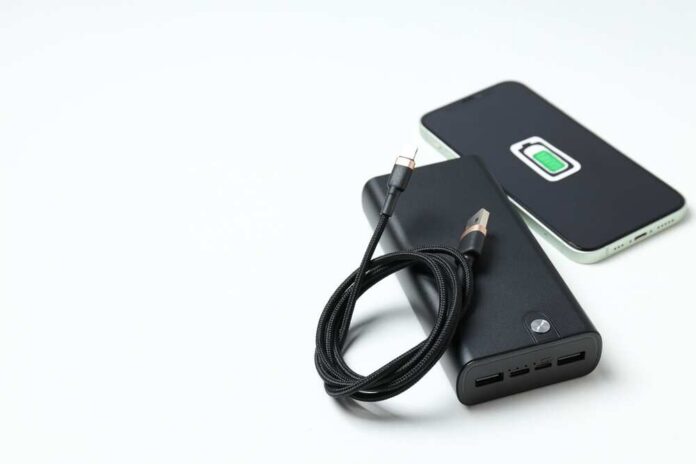
One nervous confession about a charging power bank in the cargo hold was enough to turn a routine holiday flight into an unscheduled night in Rome—and that “overreaction” is exactly how modern aviation safety is designed to work.
Story Snapshot
- A London-bound easyJet flight diverted to Rome after a passenger admitted a power bank was charging in checked luggage.
- International rules treat lithium power banks in the hold as a serious fire risk, even if nothing has actually gone wrong—yet.
- The captain’s decision, while hugely inconvenient, closely matched long-standing safety regulations and airline policy.
- The incident exposes a deeper tension between passenger frustration and a safety culture built to tolerate “overkill” rather than regret.
How a Single Comment Rerouted an Entire Flight
Passengers on an easyJet service from Hurghada, Egypt, to London Luton settled in for a routine five-hour hop back to the United Kingdom when the cabin crew received an unexpected confession.[1]
A traveler admitted they had left a power bank in their checked suitcase and, worse, that it was actively charging a device inside the hold.[1][2]
Nearly four hours into the flight, the pilots turned off their planned route and headed for Rome Fiumicino, where the aircraft landed without incident.[1]
Flight diverted after passenger reveals power bank charging in checked luggage https://t.co/Xq9TnUPUe0
— FOX Business (@FoxBusiness) May 24, 2026
Once on the ground, the disruption became real. With no replacement crew available, easyJet kept passengers overnight in Rome, providing hotel rooms and meals where possible.[1]
The airline later stated that the captain diverted “as a precaution in line with safety regulations,” a phrase that sounds like boilerplate until you understand how lithium batteries behave when they fail.[1][2]
From a traveler’s perspective, it felt like collective punishment for one person’s mistake. From a safety standpoint, it was textbook.
Why a Charging Power Bank in the Hold Sets Off Alarm Bells
Power banks run on lithium-ion batteries, which can enter a failure mode called thermal runaway—an internal reaction that drives temperature up, ignites flammable components, and can be stubbornly difficult to extinguish.[1][3]
Unlike a paper fire, a lithium battery fire can reignite after it seems out and can rapidly spread to anything combustible nearby. Cargo holds do have fire-suppression systems, but they are not designed around unidentified, uncontrolled charging devices buried in bags.[3]
That is why international aviation organizations such as the International Air Transport Association and the International Civil Aviation Organization forbid passengers from putting power banks in checked luggage.[1][3]
Regulators want batteries where the crew can see, smell, and reach them. In the cabin, a smoking device can be doused with specialized extinguishers and cooling techniques that crews train on every year.[1]
In the hold, nobody sees the first wisp of smoke; by the time sensors detect a problem, the margin for error shrinks sharply.
The Rules Are Not Suggestions, Even for “Harmless” Gadgets
Industry guidance is blunt: lithium power banks belong only in hand luggage, and passengers must not use or charge them at any time during the flight.[3][4]
EasyJet’s own dangerous-goods rules state that luggage with built‑in power banks must have the battery disconnected or removed, or the bag cannot travel.[4]
Independent reporting on this diversion notes that easyJet bans the use or charging of power banks on board and expects them to be protected in individual packaging when carried.[4]
Once the crew heard “charging power bank in checked luggage,” the scenario changed from a rule violation to a potential in‑progress hazard. No one on board could inspect the bag at 36,000 feet.
No one could confirm the device’s quality, its state of charge, or whether it was wedged under clothing that could trap heat.
Regulations are deliberately in these moments. They assume that if something can go wrong in a way that is hard to contain, you act early, not late.[1][3]
Overreaction or Common-Sense Safety in a Metal Tube?
Critics will argue that since nothing actually caught fire, the diversion wasted fuel, money, and hundreds of people’s time. That sentiment is emotionally understandable but technically shallow.
Aviation safety does not work like courtroom evidence; pilots do not wait for flames as proof beyond a reasonable doubt. They work on risk, probabilities, and worst-case consequences. A tiny chance of a cargo‑hold fire can justify a heavy response when the downside is a planeload of people trapped above the clouds.
EasyJet flight to London diverted to Rome Monday after a passenger reported leaving a power bank charging in checked luggage. Airline confirmed the diversion was a safety precaution due to fire risk from lithium batteries.
— 💕BadBoyEmann💕 (@EmmanuelOc64999) May 25, 2026
From this perspective, the real scandal is not that the captain diverted. The real scandal is that, in 2026, passengers still treat clearly stated battery rules as optional.
This is the same culture that bristles at seatbelt fines and then expects everyone else to meet perfect safety standards.
Personal responsibility matters here: if you bring modern electronics onto an airplane, the least you can do is read the rules and keep potentially volatile batteries out of reach of passengers.
Sources:
[1] Web – UK-bound EasyJet flight made emergency diversion to Rome after …
[2] Web – EasyJet Flight Makes ‘Precautionary’ Diversion After Passenger …
[3] Web – Charging Power Bank Diverts easyJet Flight – Simple Flying
[4] Web – EasyJet London flight forced to divert after power bank charged in …