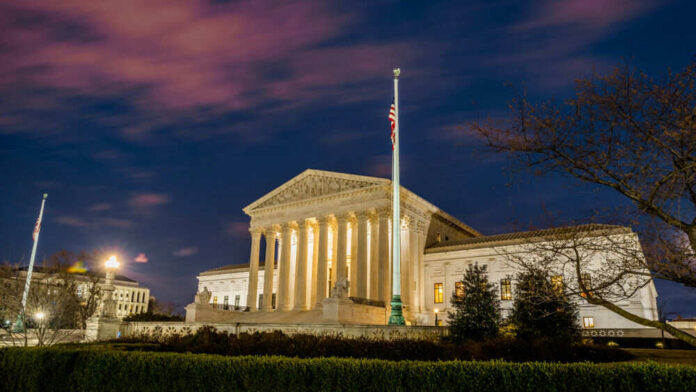
Sparking outrage among liberals and cheers from MAGA supporters, the Supreme Court’s decision has granted President Donald Trump the authority to remove three Democrat members from the Consumer Product Safety Commission (CPSC).
At a Glance
- President Trump dismissed three Democrat commissioners from the CPSC via email.
- The Supreme Court ruled in favor of Trump’s actions, citing previous decisions.
- This decision could significantly alter the balance of power within regulatory agencies.
- Critics warn of reduced consumer safety oversight and increased executive control.
Supreme Court Backs Trump’s Move
On May 9, 2025, President Trump took the bold step of dismissing three Democrat commissioners from the CPSC—Richard Trumka Jr., Mary T. Boyle, and Alexander Hoehn-Saric—through a simple email. This move left the commission with just two Republican members, raising eyebrows and sparking legal challenges.
The commissioners argued that their removal violated the Consumer Product Safety Act, which stipulates removal only for neglect of duty or malfeasance. Despite these challenges, the Supreme Court, with its 6-3 conservative majority, sided with Trump on July 23, upholding the dismissals.
This decision underscores the ongoing shift toward enhancing presidential control over independent agencies, a shift that began gaining traction with previous landmark rulings such as Seila Law LLC v. CFPB.
With this ruling, the Supreme Court has effectively given the President more leeway in shaping regulatory bodies to reflect his administration’s agenda. This poses a direct challenge to the traditional notion of agency independence, which was designed to insulate such bodies from political pressures.
Critics, including liberal Justice Elena Kagan, have voiced concerns that this erosion of independence could undermine the foundational checks and balances that have historically governed the relationship between the executive branch and regulatory agencies.
Implications for Consumer Safety
The immediate aftermath of this decision is a CPSC operating with a Republican majority, which could signal a shift in regulatory priorities.
Consumer advocates worry that this could lead to a relaxation of safety standards and a reduction in oversight, potentially allowing more hazardous products to reach the market.
The CPSC’s mission to protect the public from unsafe products may be compromised if political considerations take precedence over safety concerns. Industry players, on the other hand, might welcome a more business-friendly approach that reduces compliance burdens. However, this comes with its own set of risks, including liability from increased product recalls.
The decision also sets a precedent that could embolden future administrations to exert similar control over other independent agencies, potentially affecting sectors such as finance, labor, and environmental regulation. This potential for increased executive interference raises questions about the stability and predictability of regulatory frameworks, as each administration may seek to impose its agenda on these bodies.
Long-Term Effects on Regulatory Independence
The long-term implications of this decision could be profound, reshaping the landscape of federal regulatory agencies. The balance of power has shifted in favor of the executive branch, eroding the statutory protections that once safeguarded the independence of agencies.
This could lead to greater policy swings with each new administration, undermining the consistency and reliability that industries and consumers rely on. Legal experts have noted that the Supreme Court’s ruling diverges from nearly a century of precedent that protected independent agency officials from at-will removal. The broader question remains: how will this newfound executive power impact the accountability and effectiveness of regulatory bodies?
As the dust settles, the focus now shifts to President Trump’s next moves. He has yet to nominate replacements for the dismissed commissioners, leaving the CPSC operating at less than its full capacity. The ongoing debate over executive power and agency independence is far from over, and it will be crucial to monitor how these developments unfold in the coming months. The stakes are high, not only for consumer safety but also for the future of regulatory governance in the United States.