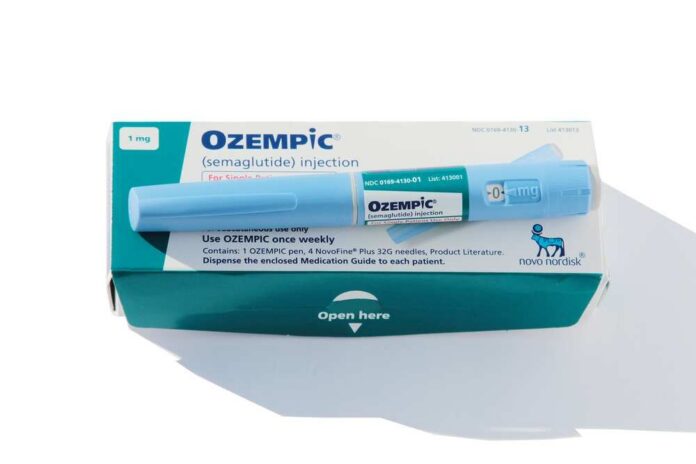
For the first time, Medicare is stepping directly into America’s weight-loss wars, offering powerful GLP-1 drugs for just $50 a month while quietly testing how far taxpayers are willing to go.
Story Snapshot
- New Medicare GLP-1 Bridge program covers select weight-loss drugs for $50 a month starting July 1, 2026
- Coverage is temporary through 2027 and runs outside normal Part D rules, so the $50 does not count toward drug plan limits
- Only certain patients qualify based on body mass index and serious health conditions tied to obesity
- Drug makers Novo Nordisk and Eli Lilly win millions of new customers at a special government-negotiated price
Medicare’s sudden move on obesity drugs
Medicare has long refused to cover weight-loss drugs, even as obesity rates rose and new treatments hit the market. That stance changed on July 1, 2026, when the Centers for Medicare and Medicaid Services launched the Medicare GLP-1 Bridge, a national program that helps certain Part D enrollees get GLP-1 weight-loss medications for a fixed $50 monthly copay.
This is not a side tweak. It is a direct federal test of whether drug-based weight loss belongs inside senior health coverage.
The Bridge program sits apart from normal Medicare drug coverage rules. It is a short-term “demonstration” that runs from July 1, 2026, through December 31, 2027. It operates outside the usual Part D payment flow, so Part D drug plans do not carry any financial risk and do not have to opt in.
Medicare pays pharmacies directly through a central system, then claws money back from manufacturers under a special pricing deal. Washington gets to try broad access without fully rewriting the benefit.
Who qualifies and which drugs are covered
The Bridge does not open the door to everyone who wants to lose 20 pounds before a class reunion. To participate, you must have Medicare drug coverage through a standalone Part D plan or a Medicare Advantage plan with drugs, be at least 18 years old, and meet strict medical rules tied to obesity.
Doctors must attest that the GLP-1 is for chronic weight management, not just a short-term vanity goal, and that the patient is also working on diet and lifestyle changes. This is meant to look like serious medicine, not cosmetic help.
Clinical criteria follow a three-track system. One track allows coverage for people with a body mass index of 35 or higher based on weight alone. A second track opens the door at a body mass index of 30 or higher if the patient also has major problems like heart failure, hard-to-control high blood pressure, or kidney disease.
A third track lowers the bar to a body mass index of 27 for people with a history of prediabetes, heart attack, stroke, or peripheral artery disease. Those cutoffs reflect growing evidence that obesity drives expensive heart and kidney problems later in life.
The $50 price and what it really means
For patients, the headline is simple: a one-month supply of a covered GLP-1 drug costs $50, for either a 28-day or 30-day fill depending on the medicine. That price stays the same no matter your income level or how far you are into the Part D benefit phases.
On the surface, that looks like a huge win for seniors facing list prices that can run well over $1,000 a month. For many on fixed incomes, $50 is painful but possible. It feels far more like a co-pay than a car payment.
WEGOVY NOW AVAILABLE TO ELIGIBLE MEDICARE PATIENTS THROUGH NEW "MEDICARE GLP-1 BRIDGE"
– Eligible Medicare beneficiaries can now access Wegovy injection AND pill for a $50/mo copay
– Program runs through end of 2027
– Available nationwide
– 15-20 million older… pic.twitter.com/JAcRPg6T70— Hims House (@himshouse) July 1, 2026
The fine print, however, matters. That $50 payment does not count toward your Part D deductible or your yearly out-of-pocket limit. It also does not qualify for help under low-income subsidies or the Medicare Prescription Payment Plan that lets people spread drug costs over time.
The Bridge is a separate lane: cheap access to a narrow set of drugs, paid in cash each month, with no credit toward your broader drug spending protections. This design looks like a guardrail against runaway costs but also like a hidden pocketbook hit for lower-income seniors.
Which GLP-1s are on the menu and who is left out
The program covers only three branded drugs that the Food and Drug Administration has approved for weight loss: Foundayo tablets, Wegovy as both injections and tablets, and the Zepbound KwikPen device. Single-dose Zepbound pens and vial forms are not covered.
Coverage is limited to these obesity-labeled versions, not to GLP-1 drugs prescribed for type 2 diabetes or heart risk reduction, which must still go through normal Part D rules. That narrow list reflects both safety worries and cost control.
Important groups are shut out. The prescriber guide makes clear that Bridge coverage is only for patients without type 2 diabetes, moderate-to-severe sleep apnea, or fatty liver disease. That carve-out will strike many readers as strange, since those problems often sit directly on top of obesity.
It shows the compromise at work: Medicare is willing to dip a toe into weight-loss coverage, but not to blow open access for every obesity-linked condition all at once. Critics who care about limited government will see this as one more reason to treat “temporary” pilots with caution.
Behind the scenes: money, politics, and long-term stakes
Drug makers are not doing this out of charity. Under the Bridge, Novo Nordisk and Eli Lilly agreed to supply the covered GLP-1s at a net price of about $245 per month. Pharmacies are reimbursed at no less than the wholesale acquisition cost minus the $50 copay, plus a fee. Manufacturers then pay back the difference between that wholesale price and the negotiated $245 net rate.
This structure gives companies millions of new Medicare-age users and billions in potential revenue, while letting Medicare claim it paid “less than list price.” Taxpayers, as always, are on the hook if this pilot becomes the norm.
The Bridge ends on December 31, 2027, and is meant to feed into a broader effort called the Better Approaches to Lifestyle and Nutrition for Comprehensive Health model. That future model could lock GLP-1 coverage into a more permanent design. For people who start therapy now, obesity is a lifelong condition, not a two-year experiment.
So there is real risk that seniors will grow dependent on these drugs only to face higher costs or tighter rules once the politics shift. From a common-sense lens, the key test is simple: do these medicines cut hospital stays and heart attacks enough to justify the bill, or are we subsidizing drugs first and asking questions later?
Sources:
cbsnews.com, cms.gov, corelifemd.com, medicare.gov