If you thought the situation with Iran couldn’t get more tense, think again; President Donald Trump has made it clear that the U.S. isn’t done yet.
At a Glance
- U.S. and Israel conducted coordinated strikes on Iran’s nuclear facilities in June 2025.
- President Trump declared the strikes as a significant success against Iran’s nuclear ambitions.
- Iran vows to continue its uranium enrichment program despite the damages.
- Trump warns of further strikes if Iran resumes its nuclear activities.
U.S. Strikes and Iran’s Firm Stance
In a move that has sent shockwaves across the globe, the United States, under President Trump’s directive, launched a series of strikes on Iran’s nuclear facilities.
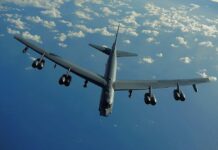
Dubbed “Operation Midnight Hammer,” these strikes targeted key locations such as Fordow, Natanz, and Isfahan, using advanced bunker-buster bombs and cruise missiles.
The operation was part of a coordinated effort with Israel, which had initiated the assault by attacking Iran’s nuclear program earlier in June 2025.
The Iranian government, led by Foreign Minister Abbas Araghchi, acknowledged the extensive damage caused by these attacks. Despite this, Araghchi made it clear that Iran remains steadfast in its commitment to continue uranium enrichment.
This stance is seen as both a defiance of Western pressure and a statement of national pride. Iran’s determination to maintain its nuclear capabilities underscores the ongoing tension and the potential for further escalation in the region.
Trump’s Warning and Strategic Implications
President Trump has not minced words about the potential for future military action.
In his latest address, he emphasized that the strikes were “very successful” in crippling Iran’s nuclear ambitions.
However, he also issued a stern warning to Iran: any attempt to resume or expand its nuclear activities could trigger additional strikes. This hardline stance aligns with Trump’s broader strategy of deterrence through strength, ensuring that Iran understands the serious consequences of defying international mandates.
While the operation has set back Iran’s nuclear program, reports suggest that the damage may only result in a temporary setback of “months, not years.”
This raises questions about the long-term effectiveness of military interventions and whether they can truly eliminate the threat posed by Iran’s nuclear ambitions.
International Reactions and Future Prospects
The international community is divided on the U.S. strikes.
While some allies support the actions taken by the U.S. and Israel, others, including the International Atomic Energy Agency (IAEA) and the European Union, have expressed concerns over the legality and potential consequences of such military interventions.
The IAEA, in particular, condemned the strikes, emphasizing the risks they pose to global nonproliferation norms.
As tensions remain high, the prospect of diplomatic engagement appears even more remote. Iran’s recent decision to suspend cooperation with the IAEA further complicates the situation, reducing transparency and increasing proliferation risks.
The potential for renewed conflict looms large, with regional and global stability hanging in the balance.