
A 43-year-old security guard spent eight days trapped in a basement under a Venezuelan shopping mall and came out alive, calm enough to joke, “Don’t tell my wife.”
Story Snapshot
- A security booth in a collapsed mall basement formed an air pocket that kept Hernán Alberto Gil Flores alive.
- Rescuers used cameras, hoses, and tubes to deliver air, water, and food to him through the rubble.
- His survival fits a rare but documented pattern of people lasting a week or more under collapsed buildings.
A basement shift on a normal day that turned into eight days under concrete
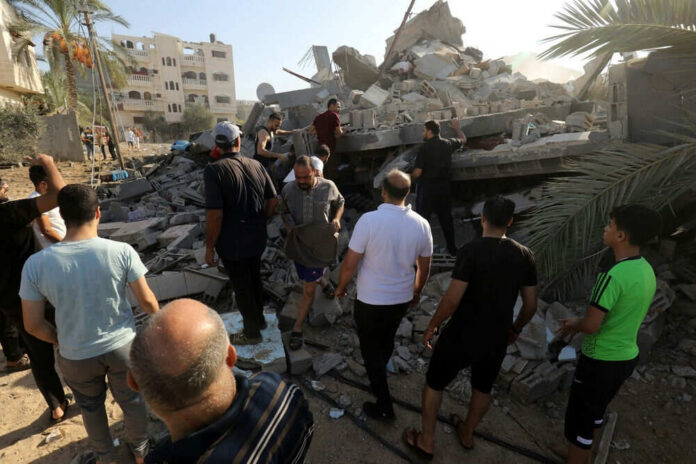
Hernán Alberto Gil Flores showed up for work as a security guard at the Galerías Playa Grande shopping center in the coastal state of La Guaira, Venezuela. The twin earthquakes hit on June 24 with magnitudes of 7.2 and 7.5, tearing through hundreds of structures and collapsing many outright.
In the mall’s basement, the building came down around his small security booth. That booth, usually meant to house a guard and a clipboard, suddenly became the difference between life and death.
The booth’s rigid walls and narrow space held back the crush of concrete and steel, forming what experts call a survivable void space. Instead of being crushed, Hernán had an air pocket and some physical protection.
Medical studies of earthquake entrapment show rescues as late as 13 to 14 days in rare cases, and average “last rescues” around seven days. His eight-day ordeal falls at the outer edge of what science already knows is possible when a void space and an air supply exist.
Seven nations, one man, and a tunnel through chaos
Once rescuers realized Hernán was alive in the rubble of the collapsed mall, the operation shifted from search to a focused extraction. A Chilean urban search-and-rescue team led the mission, coordinating specialized crews from the United States, Portugal, Mexico, Costa Rica, El Salvador, and Venezuela itself.
These teams had already been rushing to dozens of other sites across La Guaira, where at least 1,450 people were dead and tens of thousands were missing after the quakes.
A security guard was pulled out of the rubble alive on Thursday, more than one week after twin earthquakes devastated Venezuela. Rescuers first made contact with the man four days ago and fed him through a syringe as they worked tirelessly to free him. @CamiloReports has more… pic.twitter.com/T5BUhH9DNl
— CBS Evening News with Tony Dokoupil (@CBSEveningNews) July 3, 2026
Reaching him was not simple. Teams drilled and cut through tangled rebar and broken slabs, working more than 100 hours in cramped, dangerous tunnels. They snaked a telescopic camera into the void to find his exact position and to talk to him.
Through narrow gaps they pushed a hose for water and a tube to feed oxygen. That setup meant Hernán was not just waiting in the dark. He was in contact with rescuers, sipping water, and breathing supported air while they carved a path toward him.
Eight days under rubble and the science of staying alive
Many people assume no one can survive more than three days without water. That rule of thumb ignores what happens when a person lies almost perfectly still in cool, shaded conditions.
When someone is trapped under rubble, movement drops to near zero and the body uses far less water and energy. Hernán also received sips of water from the hose once rescuers reached him, which completely changes the picture. At that point, the clock was cruel but not hopeless.
Medical research from 34 major earthquakes shows that in just over half, survivors were still found after two days, and in some, people survived beyond 10 days. Experts say the key factors are air, some protection from crushing blows, moderate temperatures, and limited but real access to water.
Hernán had all four: an air pocket, the booth as a shield, coastal basement temperatures, and rescue-delivered water and oxygen. His case feels miraculous, but it also aligns with what doctors and geophysicists already understand about rare, long-term entrapments.
A miracle story in the middle of anger and broken systems
Media coverage quickly framed his rescue as a “miracle,” and on one level that word fits the emotion of seeing a man wave his arm after eight days underground.
Yet focusing only on the miracle can hide the hard truth: this success leaned on skill, foreign help, and tools that many Venezuelans correctly say were missing in too many other places. Citizens flooded social media with anger over slow aid, empty fuel stations that left heavy machinery idle, and broken communications.
Miracle Rescue: Venezuelan Security Guard Pulled Alive After Eight Days Beneath Earthquake Rubble https://t.co/IVOqFh6JM9 #News
— The Right News, Right Now. (@BradPorcellato) July 6, 2026
This disaster looks at this contrast and asks simple questions. Why did it take foreign teams, from Chile to the United States, to deliver the most impressive rescues? Why are cranes silent in a nation with the world’s largest oil reserves because fuel logistics failed?
Hernán’s survival proves that when skilled crews, working gear, and basic supplies come together, lives can be saved even after a week has passed. The tragedy is that for thousands of others, that mix never arrived in time.
What this one basement survivor really tells the rest of us
Hernán’s story lands in that narrow space between hope and warning. Hope, because his calm voice under the rubble and his wave to the camera show that a trapped person is not doomed as fast as many assume. Warning, because he survived thanks to a small island of competence in a wider sea of broken infrastructure and weak leadership.
For readers far from Venezuela, the lesson is blunt. Strong buildings, fuel in the tank, and trained rescue teams are not luxuries. They are the quiet systems that turn “miracles” into planned outcomes.
Sources:
apnews.com, ndtv.com, christianpost.com, timesofindia.indiatimes.com, instagram.com, dw.com, reuters.com, aljazeera.com, news.un.org, youtube.com